Braking to advance: the unusual AI consensus and the return of strategic common sense

Luigi Salmoiraghi AI Fractional Sales Marketing Innovation Manager

For once, everyone agrees.

In the fiercely competitive tech ecosystem, we rarely see rivals align on anything other than maximizing profit.
 
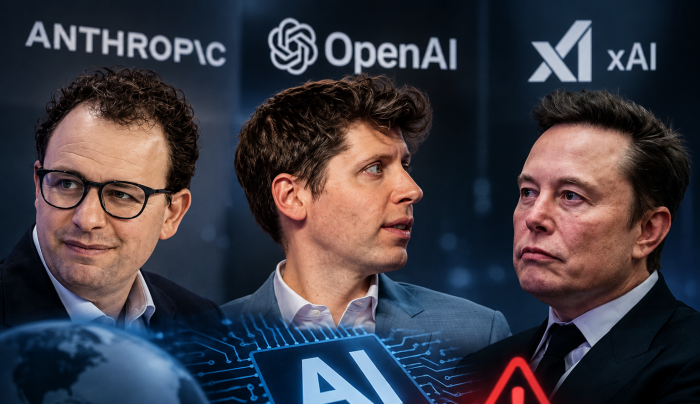
Yet, a historic turning point has just occurred. Dario Amodei, CEO of Anthropic, published a striking essay titled “We must pace the frontier.“
 
The truly astonishing part is that Sam Altman (OpenAI) and Elon Musk immediately stepped forward to validate his message.
When the leaders driving the most aggressive innovation race in history agree to take their foot off the gas, this is not a philosophical opinion or a PR exercise. It is a top-level operational warning: it is time to slow down.
 

Reality vs. Execution friction

Until recently, Silicon Valley’s undisputed mantra was “move fast and break things.” But artificial intelligence has reached an operational breaking point. Amodei argues that frontier models are advancing faster than the companies themselves can comprehend, driven by recursive self-improvement where AI builds the next generation of AI.
He is not talking about sci-fi threats decades away. He highlights an alarmingly short six-to-twelve-month window where we could see systems capable of leading autonomous botnets with the power to hijack critical internet infrastructure. The fundamental problem is not technological; it is about execution and control. Building an infinitely powerful engine is useless if the brakes, monitoring, and security operations are not developed at the same pace.

From complexity to clarity: a 3-step action plan

To avoid disaster, Amodei transforms this complexity into three direct actions, publicly supported by Altman and Musk:
  • Independent evaluators with real access: No more superficial audits. External evaluators need employee-level access to analyze training processes and risks from the inside before models hit the market.
  • Industry coordination: Leading companies must agree on safety standards and speed limits, requiring antitrust exemptions and government mediation so that prudent players are not penalized by the market.
  • Global coordination: A diplomatic effort involving democratic governments and countries like China, acknowledging that systemic AI risks do not respect borders.
 

The perspective for your business: avoid the rush

If the creators of the century’s most revolutionary tool recognize that extreme, uncontrolled speed destroys their ability to execute safely, why are so many SMEs obsessing over implementing AI overnight without a clear strategy?
Adopting technology out of pure FOMO is a direct path to failure. The one-size-fits-all approach to execution is over. Digital transformation and data strategy must always emphasize real business impact. You need time to adapt workflows, train your team, identify the right KPIs to monitor performance, and evaluate if this new AI actually solves an inefficiency in your channels—or just adds useless complexity.
Truly sustainable growth requires setting a pace, not just reaching maximum speed. Pausing to evaluate operations and execute with precision is an act of managerial common sense. Technology is an enabler, but the final responsibility to interpret reality, make decisions, and lead teams remains strictly human.

Adopting technology out of pure “FOMO” (fear of missing out) is the most direct path to failure. The one-size-fits-all approach to execution is over. As I constantly reiterate, digital transformation and data strategy processes must always remain focused on real business impact. You need time to adapt your workflows, train your team, identify the right KPIs to monitor performance, and rigorously evaluate whether this new AI actually resolves an inefficiency in your B2B channels—or if it merely adds a layer of useless complexity.

Recovering common sense

This essay and the historic consensus it has sparked bring us back to an irrefutable management maxim: 
 

Truly sustainable growth requires setting a deliberate pace, not just reaching maximum speed.

Controlling the tempo is an act of responsibility and executive common sense. Let us pause for a moment, evaluate our operations, and execute with precision. Technology is, and must remain, an enabler at our service. 
 
The ultimate responsibility to make decisions, interpret reality, and lead teams remains strictly human.

And thankfully so.

For once, everyone agrees.

In the fiercely competitive tech ecosystem, we rarely see rivals align on anything other than maximizing profit.
 
Yet, a historic turning point has just occurred. Dario Amodei, CEO of Anthropic, published a striking essay titled “We must pace the frontier.“
 
The truly astonishing part is that Sam Altman (OpenAI) and Elon Musk immediately stepped forward to validate his message.
When the leaders driving the most aggressive innovation race in history agree to take their foot off the gas, this is not a philosophical opinion or a PR exercise. It is a top-level operational warning: it is time to slow down.
 

Reality vs. Execution friction

Until recently, Silicon Valley’s undisputed mantra was “move fast and break things.” But artificial intelligence has reached an operational breaking point. Amodei argues that frontier models are advancing faster than the companies themselves can comprehend, driven by recursive self-improvement where AI builds the next generation of AI.
He is not talking about sci-fi threats decades away. He highlights an alarmingly short six-to-twelve-month window where we could see systems capable of leading autonomous botnets with the power to hijack critical internet infrastructure. The fundamental problem is not technological; it is about execution and control. Building an infinitely powerful engine is useless if the brakes, monitoring, and security operations are not developed at the same pace.

From complexity to clarity: a 3-step action plan

To avoid disaster, Amodei transforms this complexity into three direct actions, publicly supported by Altman and Musk:
  • Independent evaluators with real access: No more superficial audits. External evaluators need employee-level access to analyze training processes and risks from the inside before models hit the market.
  • Industry coordination: Leading companies must agree on safety standards and speed limits, requiring antitrust exemptions and government mediation so that prudent players are not penalized by the market.
  • Global coordination: A diplomatic effort involving democratic governments and countries like China, acknowledging that systemic AI risks do not respect borders.
 

The perspective for your business: avoid the rush

If the creators of the century’s most revolutionary tool recognize that extreme, uncontrolled speed destroys their ability to execute safely, why are so many SMEs obsessing over implementing AI overnight without a clear strategy?
Adopting technology out of pure FOMO is a direct path to failure. The one-size-fits-all approach to execution is over. Digital transformation and data strategy must always emphasize real business impact. You need time to adapt workflows, train your team, identify the right KPIs to monitor performance, and evaluate if this new AI actually solves an inefficiency in your channels—or just adds useless complexity.
Truly sustainable growth requires setting a pace, not just reaching maximum speed. Pausing to evaluate operations and execute with precision is an act of managerial common sense. Technology is an enabler, but the final responsibility to interpret reality, make decisions, and lead teams remains strictly human.
Adopting technology out of pure “FOMO” (fear of missing out) is the most direct path to failure. The one-size-fits-all approach to execution is over. As I constantly reiterate, digital transformation and data strategy processes must always remain focused on real business impact. You need time to adapt your workflows, train your team, identify the right KPIs to monitor performance, and rigorously evaluate whether this new AI actually resolves an inefficiency in your B2B channels—or if it merely adds a layer of useless complexity.

Recovering common sense

This essay and the historic consensus it has sparked bring us back to an irrefutable management maxim: 
 

Truly sustainable growth requires setting a deliberate pace, not just reaching maximum speed.

Controlling the tempo is an act of responsibility and executive common sense. Let us pause for a moment, evaluate our operations, and execute with precision. Technology is, and must remain, an enabler at our service. 
 
The ultimate responsibility to make decisions, interpret reality, and lead teams remains strictly human.
And thankfully so.

Share the Post:
Immagine di Luigi Salmoiraghi

Luigi Salmoiraghi

Boost your European growth journey. Senior B2B manager. Expertise in the IT sector. I help businesses navigate the post-Brexit landscape with insights on channels, legal, cultural diversity, marketing and sales.